
Introduction to PPC Advertising
In today’s competitive digital marketing landscape, businesses need efficient strategies to capture the attention of potential customers quickly. This is where PPC (Pay-Per-Click) advertising comes into play. PPC advertising is one of the most effective methods of driving traffic to a website and generating immediate results. Unlike traditional forms of advertising, PPC campaigns allow businesses to pay only when users click on their ads, making it a cost-effective option that offers measurable returns on investment.
This article explores PPC advertising in detail, highlighting its core elements, how it works, its advantages, and why it is an essential tool for businesses seeking fast and measurable results. Whether you’re a beginner in digital marketing or an experienced marketer looking to refine your strategies, this guide will provide you with the knowledge and tools to succeed with PPC advertising.
What is PPC Advertising?
PPC (Pay-Per-Click) advertising is an online marketing model where advertisers pay a fee each time their ad is clicked. It’s essentially a way of buying visits to your site, rather than earning them organically through SEO. The most popular form of PPC advertising is search engine advertising, where ads appear in search engine results when a user searches for specific keywords.
Key Components of PPC Advertising
-
Ad Auction: Most PPC platforms, like Google Ads, use an auction system where advertisers bid for specific keywords. The highest bidder for a particular keyword doesn’t always win the top spot; instead, Google uses a combination of bid amount, ad relevance, and quality score to determine ad placement.
-
Keyword Selection: Keywords are the foundation of PPC campaigns. These are the terms or phrases that trigger your ads when searched by potential customers. Keyword research plays a crucial role in determining the success of PPC campaigns.
-
Landing Pages: The destination where users land after clicking on your ad. A well-designed, relevant landing page can improve conversion rates and enhance the overall effectiveness of the campaign.
-
Ad Copy: The text or images in the ad itself. Crafting a compelling ad copy with a clear call to action (CTA) is crucial for driving clicks and conversions.
Why PPC Advertising Works for Fast Results
Unlike traditional advertising methods, PPC advertising provides immediate visibility. Once a campaign is live, ads begin appearing in search results, and businesses can start driving traffic instantly. The key reason why PPC is so effective for achieving fast results lies in the way it targets users at the moment they are searching for something relevant to your business.
1. Instant Traffic
PPC allows businesses to drive immediate traffic to their website. While SEO efforts can take months to yield results, PPC ads appear as soon as the campaign is live, ensuring that your website receives immediate attention.
2. Precise Targeting
PPC campaigns offer unmatched targeting capabilities. You can target ads based on:
-
Keywords: Trigger ads when potential customers search for specific terms related to your business.
-
Demographics: Target audiences based on factors like age, gender, location, and interests.
-
Device: Show ads to people browsing from mobile devices, tablets, or desktops.
-
Time: Schedule ads to appear during specific times of the day or week to maximize relevance.
3. Budget Control
With PPC, you have complete control over your budget. You can set daily or monthly limits, and the platform will ensure your spending doesn’t exceed this amount. This makes PPC an affordable and flexible advertising option for businesses of all sizes.
4. Measurable ROI
One of the most appealing aspects of PPC is the ability to track and measure performance. Using tools like Google Analytics and Google Ads, you can monitor metrics such as click-through rates (CTR), cost-per-click (CPC), conversion rates, and more. This level of tracking allows businesses to optimize campaigns in real time and maximize their ROI.
5. Competitive Advantage
If your competitors are running PPC campaigns, you could be missing out on valuable market share by not doing the same. PPC provides an opportunity to compete with both large corporations and smaller local businesses in a cost-effective way, allowing you to secure a competitive edge.
How PPC Advertising Works
Now that we’ve covered the benefits of PPC advertising, it’s time to dive into how it actually works. Let’s break down the process step by step.
Step 1: Keyword Research
Before you create a PPC campaign, the first step is to identify the right keywords. These are the terms your target audience will type into a search engine when looking for products or services like yours. Tools like Google Keyword Planner, SEMrush, and Ahrefs can help you identify high-traffic keywords with low competition, ensuring the best chances for success.
Step 2: Ad Creation
Once you have your keywords, the next step is to create your ad copy. The ad must be engaging and relevant to the user’s search query. Most search engine PPC ads consist of:
-
Headline: A catchy and relevant title.
-
Description: A brief, compelling description that explains the benefits of your product or service.
-
Call to Action: A clear CTA telling users what to do next (e.g., “Shop Now,” “Get a Quote,” “Sign Up Today”).
Step 3: Ad Auction
When a user enters a search query that matches your keywords, an auction takes place. Multiple advertisers may bid on the same keyword. However, winning the auction isn’t simply about having the highest bid. Google also considers factors like ad relevance and quality score. Quality score is based on the expected CTR, ad relevance, and landing page experience.
Step 4: Ad Display
Once your ad wins the auction, it’s displayed in the search engine results or across the Google Display Network (if you’re running display ads). The ad is shown to users based on the keywords, demographics, and other targeting parameters you set.
Step 5: Optimization
PPC campaigns require constant monitoring and optimization. This includes adjusting bids, refining keyword targeting, testing different ad copies, and analyzing performance metrics. Over time, you’ll be able to refine your campaigns to achieve better results.
PPC Advertising Platforms
There are several platforms where you can run PPC campaigns, but the two most commonly used are:
1. Google Ads
Google Ads (formerly AdWords) is the most popular PPC platform, and for good reason. Google dominates the search engine market, with over 90% of global market share. With Google Ads, you can run both search and display campaigns, target specific keywords, and use advanced targeting options to reach the right audience.
2. Bing Ads
Bing Ads (now known as Microsoft Advertising) is another powerful PPC platform, particularly for reaching older demographics. While Bing holds a smaller market share than Google, it’s still a valuable platform for businesses to explore.
3. Social Media Ads
Social media platforms like Facebook, Instagram, LinkedIn, and Twitter also offer PPC advertising opportunities. These platforms allow for highly targeted advertising, often based on user interests, demographics, and behaviors.
4. Amazon Ads
For e-commerce businesses, Amazon Ads can be highly effective. As one of the largest online marketplaces, Amazon allows sellers to run sponsored product ads, sponsored brand ads, and display ads targeting specific product searches.
Best Practices for PPC Advertising
To ensure your PPC campaigns deliver the best possible results, consider the following best practices:
1. Set Clear Goals
Before launching a PPC campaign, define clear objectives. Are you looking to increase website traffic, generate leads, or drive sales? Having a clear goal in mind will guide your campaign setup, ad copy, and targeting.
2. Use Negative Keywords
Negative keywords help prevent your ads from showing up for irrelevant searches, reducing wasted ad spend. For example, if you’re selling premium products, you may want to exclude keywords like “cheap” or “discount.”
3. Optimize Landing Pages
Your landing page should match the content and intent of the ad. If your ad promises a specific product or service, ensure that the landing page provides that same offering. A well-designed landing page increases conversion rates and lowers bounce rates.
4. A/B Testing
Constantly test different versions of your ads and landing pages to see what works best. A/B testing helps you identify which ad copy, keywords, or design elements drive the most engagement and conversions.
5. Monitor Performance and Adjust
Use data from Google Analytics, Google Ads, and other tracking tools to monitor the performance of your campaigns. If a particular ad or keyword isn’t performing well, make adjustments accordingly.
Understanding Quality Score in PPC
Quality Score is one of the key components that Google uses to determine your ad placement and cost-per-click. This score, ranging from 1 to 10, is based on the relevance of your keywords, the quality of your ad copy, and the user experience on your landing page. A high Quality Score results in better ad positions at a lower cost, which is crucial for maximizing your PPC budget. To improve your Quality Score, ensure your ad copy is highly relevant to the keywords you’re targeting, and create a seamless user experience on your landing page that aligns with your ad’s promise.
The Importance of Ad Extensions in PPC Campaigns
Ad extensions are additional information that appears below your ad copy, such as a phone number, additional links to your website, or even your physical location. These extensions not only improve the visibility of your ad but also increase the likelihood of user interaction by providing more opportunities for clicks. For example, site link extensions allow users to navigate directly to specific pages of your website, improving their experience and increasing your conversion rates. Using ad extensions effectively can boost your ad’s click-through rate (CTR), which in turn improves your Quality Score.
Retargeting: Bringing Back Lost Visitors
Retargeting, also known as remarketing, is a powerful strategy in PPC advertising that involves showing ads to people who have already visited your website but didn’t convert. By targeting users who are familiar with your brand, retargeting helps remind them of your products or services, increasing the chances of conversion. Retargeting ads can be highly personalized based on the actions users took on your site, such as viewing specific products or abandoning their shopping cart. This level of personalization makes your ads more relevant and increases the likelihood of turning those visitors into paying customers.
PPC Advertising for Local Businesses
For local businesses, PPC advertising offers a targeted and effective way to attract customers in your immediate geographic area. By using location targeting in platforms like Google Ads and social media ads, you can ensure that your ads are shown to users within a specific radius of your store or service area. This level of geographic targeting increases the chances of reaching customers who are likely to convert, whether they’re searching for your products or services on their mobile devices or desktop. Local PPC ads are especially beneficial for businesses like restaurants, repair services, and retail shops that rely on local clientele.
Understanding the Difference Between Search and Display Ads
PPC advertising comes in two primary formats: search ads and display ads. Search ads are text-based ads that appear in search engine results when users type in specific keywords. These ads are highly intent-driven because they appear when users are actively searching for something related to your business. On the other hand, display ads are typically visual banner ads that appear on websites within the Google Display Network. These ads are useful for building brand awareness and targeting potential customers who may not yet be searching for your product but could be interested in your offerings. Both types of ads play an essential role in a comprehensive PPC strategy.
The Role of Landing Pages in PPC Campaigns
Landing pages are critical to the success of any PPC campaign. A well-designed landing page provides a seamless experience for users and encourages them to take the desired action, whether it’s making a purchase, signing up for a newsletter, or filling out a contact form. It’s important that your landing page matches the content of your ad, maintaining consistency in messaging and design. A compelling landing page, with clear calls to action (CTAs), persuasive content, and an intuitive layout, will increase conversion rates and ensure your PPC efforts are worthwhile. Avoid generic homepages as landing pages – they often result in high bounce rates.
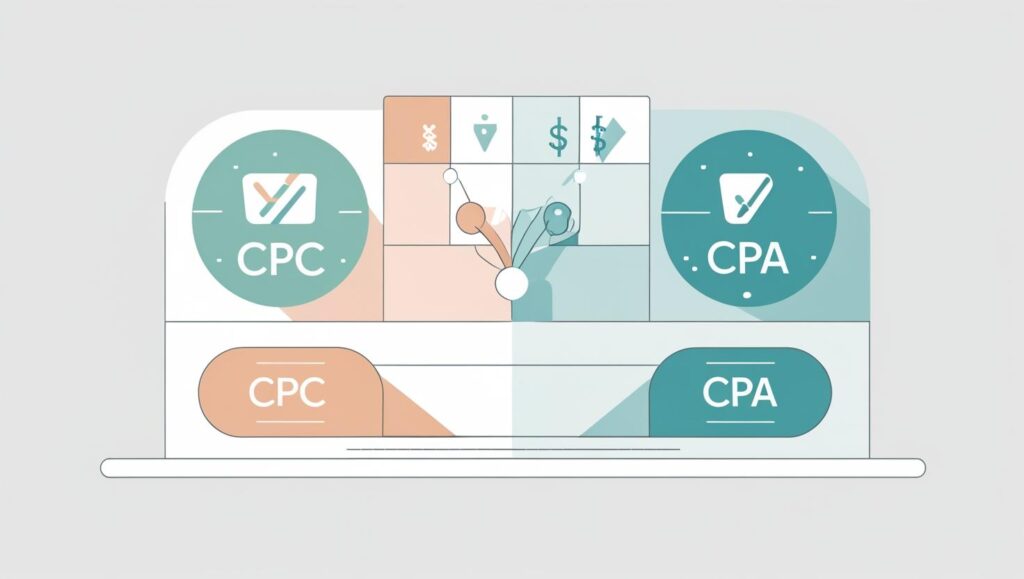
Cost-Per-Click (CPC) vs. Cost-Per-Acquisition (CPA)
In PPC advertising, cost-per-click (CPC) refers to the price you pay each time a user clicks on your ad, whereas cost-per-acquisition (CPA) is the price you pay when a user completes a specific action, such as making a purchase or signing up for a newsletter. While CPC is an important metric to track the efficiency of your campaign’s traffic generation, CPA focuses on the cost of actual conversions. Understanding both metrics allows you to optimize your PPC campaigns for better performance and lower acquisition costs. If your CPC is high but your CPA is low, this suggests that your ads are driving quality traffic at a reasonable cost.
The Power of A/B Testing in PPC
A/B testing (also known as split testing) is a technique used to test different versions of your ads and landing pages to determine which one performs better. By creating two or more variants and showing them to your audience, you can compare key metrics like click-through rates (CTR), conversion rates, and return on investment (ROI). A/B testing can be applied to various aspects of your PPC campaign, such as ad copy, images, call-to-action buttons, or even the layout of your landing page. This data-driven approach helps you identify what resonates most with your audience, allowing you to refine your campaigns and achieve better results over time.
The Role of Artificial Intelligence in PPC
Artificial intelligence (AI) has revolutionized the world of PPC advertising by automating many aspects of campaign management. AI-powered tools like Google Ads’ Smart Bidding use machine learning to optimize bids, targeting, and ad placements in real time. These tools analyze vast amounts of data, including user behavior, to predict which bids and keywords will yield the best results. With AI, advertisers can adjust their campaigns more efficiently, saving time and effort while maximizing their budget. AI also helps detect patterns in consumer behavior, enabling advertisers to create more relevant and personalized ads.
How to Manage PPC for E-Commerce Stores
E-commerce stores can greatly benefit from PPC advertising by driving traffic directly to product pages. Platforms like Google Shopping and Facebook Ads allow e-commerce businesses to display their products in front of a highly targeted audience, boosting visibility and sales. For e-commerce PPC campaigns, it’s essential to optimize product titles, descriptions, and images to make them as compelling as possible. Using dynamic remarketing ads, you can show ads to users who previously viewed a product but didn’t purchase, reminding them of what they left behind. Well-crafted ad copy, along with strategic bidding, can help you increase conversion rates and improve ROI.
Leveraging Social Media for PPC Advertising
Social media platforms like Facebook, Instagram, LinkedIn, and Twitter provide excellent opportunities for running PPC campaigns. These platforms offer granular targeting options, such as location, interests, behaviors, and even specific job titles, which enable you to reach the exact audience you’re looking for. Social media PPC also allows you to engage with users in a more visual and interactive way, using image and video ads to capture attention. Additionally, platforms like Facebook offer dynamic ads that automatically show users the products they’re most likely to purchase based on their behavior, creating a more personalized experience.
Google Display Network: Expanding Reach with Banner Ads
The Google Display Network (GDN) allows advertisers to display visual banner ads on a vast network of websites, apps, and videos across the web. These ads can target specific audiences based on interests, demographics, or website behavior. The GDN offers a great opportunity for businesses to increase brand awareness and reach a broader audience, even if they haven’t actively searched for your products or services. While display ads typically have a lower click-through rate than search ads, they can be highly effective for reaching potential customers in the earlier stages of the buying cycle.
The Importance of Mobile PPC Ads
With mobile traffic now making up the majority of online searches, optimizing your PPC campaigns for mobile devices is essential. Mobile PPC ads need to be responsive and designed for smaller screens. Mobile ads should have concise messaging, compelling calls to action, and easy-to-click buttons. Additionally, the landing page should be mobile-optimized to provide a seamless user experience, ensuring that users can navigate easily and complete the desired action. Mobile PPC ads are especially valuable for businesses targeting on-the-go consumers who are ready to make quick decisions.
The Impact of Negative Keywords in PPC Campaigns
Negative keywords are an important tool in any PPC campaign. These are keywords that you don’t want your ads to appear for. By using negative keywords, you can prevent your ads from showing up for irrelevant search queries, reducing wasted clicks and improving the efficiency of your campaigns. For example, if you sell luxury products, you might want to exclude keywords like “cheap” or “affordable” to avoid attracting customers who are not in your target demographic. Regularly reviewing and updating your negative keyword list is essential to maintaining a high-performing PPC campaign.
Understanding Conversion Tracking in PPC
Conversion tracking is a crucial aspect of PPC advertising, allowing you to measure the success of your campaigns. Conversion tracking tracks actions such as purchases, form submissions, or downloads, helping you understand whether your ads are achieving your business goals. By analyzing conversion data, you can make informed decisions about your campaign strategy, such as adjusting bids, targeting, and ad creatives. Setting up conversion tracking correctly is essential to accurately measure the ROI of your PPC campaigns and ensure you’re optimizing for the right outcomes.
The Role of Time of Day in PPC Campaigns
The timing of your PPC ads can significantly impact their performance. By scheduling your ads to appear during specific times of the day or week, you can ensure they reach your audience when they are most likely to convert. For instance, if you run a restaurant, you may want to schedule ads to appear during meal times or weekends. Many PPC platforms, including Google Ads, allow you to schedule ads to run at specific times, which can help you target users when they are most engaged and likely to take action.
The Value of Dynamic Keyword Insertion in PPC Ads
Dynamic keyword insertion (DKI) is a technique used to automatically insert the keyword that triggered your ad into your ad copy. This makes the ad more relevant to the user’s search query, increasing the likelihood of a click. For example, if a user searches for “buy leather shoes,” your ad might read, “Buy Leather Shoes at Great Prices.” DKI helps improve the relevancy of your ad copy, which can lead to higher click-through rates (CTR) and lower cost-per-click (CPC). However, it’s important to use DKI carefully, as overuse can make your ads appear unnatural or spammy.
The Importance of Ad Budgeting in PPC Campaigns
Ad budgeting is one of the most important aspects of PPC management. Setting a daily or monthly budget helps ensure that you don’t overspend on your campaigns. However, simply setting a budget isn’t enough; you need to allocate your budget efficiently. For example, if certain keywords or ad groups are driving better results, you may want to increase the budget for those areas and reduce spend on underperforming segments. Monitoring your budget regularly and making adjustments based on campaign performance ensures that you’re maximizing your return on investment.
Managing PPC Campaigns Across Multiple Channels
Running PPC campaigns across multiple channels, such as Google Ads, Bing Ads, and social media platforms, can help you reach a wider audience. However, managing campaigns across different platforms requires careful coordination to ensure consistency and avoid duplication. It’s important to tailor your campaigns to the strengths of each platform while maintaining a unified brand message. Regularly reviewing performance metrics across all platforms allows you to identify opportunities for optimization and allocate your budget to the highest-performing channels.
How PPC Advertising Integrates with SEO
PPC and SEO are often seen as separate marketing strategies, but when used together, they can complement each other and improve overall performance. For example, PPC ads can provide immediate traffic while SEO efforts work to build long-term organic visibility. Additionally, the data from PPC campaigns, such as the most effective keywords and user behavior, can inform your SEO strategy. By aligning your PPC and SEO efforts, you can create a more cohesive marketing strategy that maximizes your online presence and drives both short-term and long-term results.
The Role of Landing Page Speed in PPC Campaigns
Landing page speed is one of the most critical factors influencing the success of a PPC campaign. Slow-loading landing pages can frustrate users and lead to high bounce rates, which negatively impacts both user experience and conversion rates. Google also considers landing page speed as part of the Quality Score in PPC ads, so a slow page can result in higher costs and lower ad rankings. To optimize landing page speed, use tools like Google PageSpeed Insights to analyze and improve load times. Compress images, use minimalistic design elements, and leverage browser caching to ensure your landing page loads quickly, keeping users engaged and improving your ad performance.
The Power of Video Ads in PPC Campaigns
Video ads are an increasingly popular format within PPC advertising, especially on platforms like YouTube, Facebook, and Instagram. Videos are highly engaging and allow you to convey complex messages quickly and effectively. A well-crafted video ad can showcase your products, demonstrate their benefits, and create an emotional connection with your audience. For instance, product demos or customer testimonials are powerful tools that can influence buying decisions. Video ads also allow you to target audiences based on their behavior, interests, and previous interactions with your brand, making them a highly effective tool for both brand awareness and lead generation.
The Significance of Negative Bid Adjustments
Bid adjustments are a critical aspect of PPC campaign optimization. By adjusting bids based on factors such as location, time of day, or device, you can ensure that your ads are displayed to the most relevant audience at the most effective times. Negative bid adjustments allow you to reduce your bids for certain conditions that aren’t delivering favorable results. For example, if your ads perform poorly on mobile devices compared to desktop, you can lower the bid for mobile traffic to optimize your ad spend. Negative bid adjustments help refine targeting, ensure more efficient budget allocation, and improve overall campaign performance.
Using Geo-Targeting to Improve PPC Campaigns
Geo-targeting, or location-based targeting, is an essential feature in PPC advertising that allows businesses to serve ads to users in specific geographic locations. Whether you are targeting local customers or expanding your reach globally, geo-targeting helps you deliver more relevant ads to the right audience. For example, if you’re a restaurant in New York City, you can target users within a certain radius to ensure your ads are only shown to people who are geographically close to your business. This highly targeted approach ensures better results and prevents wasteful ad spend by focusing on users who are most likely to convert.
Cross-Platform PPC Campaign Management
Managing PPC campaigns across multiple platforms such as Google Ads, Bing Ads, Facebook, and Instagram requires a strategic approach to ensure consistency and efficiency. Cross-platform campaign management allows you to reach diverse audiences across various digital touchpoints. It is important to tailor your campaigns to the strengths and unique features of each platform while maintaining a unified brand message. Use cross-platform tracking tools to analyze performance metrics across all platforms. This helps in understanding which platform delivers the highest ROI and allows you to allocate your budget effectively to maximize results.
The Impact of Customer Reviews on PPC Ads
Customer reviews play a crucial role in increasing the trustworthiness of your PPC ads. Positive reviews can enhance your ad’s appeal by providing social proof, making potential customers more likely to click. Platforms like Google Ads allow businesses to include reviews in their ads using structured snippets. Additionally, businesses with positive reviews tend to have higher conversion rates because customers feel more confident in their purchasing decisions. Make sure to actively encourage reviews from satisfied customers and use them in your PPC campaigns to build credibility and trust.
The Importance of Audience Segmentation in PPC Advertising
Audience segmentation is a key factor in maximizing the effectiveness of PPC advertising. By dividing your target audience into different groups based on criteria such as demographics, location, interests, and behavior, you can create more personalized and relevant ads. For example, you can create specific campaigns for first-time visitors, returning customers, or those who abandoned their shopping carts. Audience segmentation allows you to tailor your ad messaging to each group, which increases engagement and conversions. Platforms like Google Ads and Facebook provide powerful tools for audience segmentation, allowing you to refine your targeting and improve ad performance.
The Role of Artificial Intelligence in Bid Management
Artificial intelligence (AI) has transformed how PPC campaigns are managed, especially in the area of bid management. Smart Bidding, a feature offered by platforms like Google Ads, uses machine learning to optimize bids for each auction based on real-time data such as user behavior, device type, location, and time of day. AI-powered bid management can help you achieve the best possible outcomes while ensuring you stay within budget. By automating bid adjustments, AI saves time and improves the accuracy of your bidding strategy, ensuring that your ads are shown to the most relevant users at the optimal cost.
Conversion Rate Optimization (CRO) and PPC
Conversion Rate Optimization (CRO) is the process of improving the percentage of website visitors who take a desired action, such as making a purchase or filling out a form. Combining CRO with PPC advertising is a powerful way to increase the effectiveness of your campaigns. Optimizing your landing page for better conversions—such as simplifying the checkout process, improving page speed, and making your CTAs more prominent—can help you get more out of your PPC traffic. The more efficient your conversion funnel, the higher the ROI from your PPC campaigns. Focus on CRO to ensure that visitors who click on your ads are more likely to convert once they land on your page.
The Future of PPC Advertising
The future of PPC advertising looks bright, with continuing advancements in automation, artificial intelligence, and machine learning. Platforms like Google Ads are continuously refining their tools to provide more intelligent bidding strategies, audience targeting options, and ad formats. In the coming years, we can expect even greater integration of AI and data-driven insights, enabling advertisers to create hyper-targeted and personalized campaigns at scale. Additionally, voice search, visual search, and video ads are set to play a larger role in PPC advertising. Staying ahead of these trends and continuously adapting your strategy will ensure long-term success in the evolving PPC landscape.
Conclusion
PPC advertising is a powerful tool for businesses looking to generate fast results. By leveraging platforms like Google Ads, Bing Ads, and social media networks, businesses can reach their target audience immediately and drive high-quality traffic to their websites. The key to success in PPC is understanding how it works, targeting the right keywords, and continuously optimizing your campaigns.
In an increasingly competitive digital landscape, PPC advertising offers an immediate and measurable way to achieve your business goals. Whether you are looking for quick traffic, higher conversion rates, or greater visibility, PPC advertising should be an integral part of your marketing strategy.
FAQS
1. What is PPC Advertising?
PPC advertising, or Pay-Per-Click advertising, is a model where advertisers pay each time a user clicks on their ad. It’s a way of buying visits to your website rather than earning them organically.
2. How does PPC work?
PPC works by displaying ads in search engine results or on social media platforms, where advertisers bid on specific keywords. When a user clicks on the ad, the advertiser pays a fee. The more relevant the ad and keyword, the better the chances of a successful campaign.
3. What are the benefits of PPC Advertising?
PPC offers immediate traffic, precise targeting, budget control, measurable ROI, and competitive advantage, making it a valuable tool for businesses seeking fast results.
4. What platforms can I run PPC ads on?
You can run PPC ads on platforms like Google Ads, Bing Ads, Facebook Ads, Instagram Ads, and LinkedIn Ads, depending on your target audience and business goals.
5. What is a Quality Score in Google Ads?
Quality Score is a metric used by Google to determine the relevance of your keywords, ad copy, and landing page. A higher Quality Score can lead to better ad placement at a lower cost.
6. How do I choose the right keywords for PPC?
Choose keywords that are relevant to your business and products, have high search volume, and are cost-effective. Use keyword research tools like Google Keyword Planner to find the best keywords.
7. What is the difference between search ads and display ads?
Search ads appear when users search for specific keywords on search engines, while display ads are visual ads that appear on websites within a display network. Search ads are more intent-driven, whereas display ads focus on brand awareness.
8. How much does PPC advertising cost?
The cost of PPC advertising varies based on factors like competition, keyword selection, and bidding strategy. Advertisers can set a daily or monthly budget, and costs are usually calculated on a cost-per-click (CPC) or cost-per-acquisition (CPA) basis.
9. How do I improve my ad’s click-through rate (CTR)?
To improve CTR, ensure your ad copy is relevant to the search query, include a clear call-to-action (CTA), use ad extensions, and target the right audience.
10. What is A/B testing in PPC?
A/B testing is the process of testing two different versions of an ad or landing page to see which performs better. It helps identify which elements—such as headlines or CTAs—drive more conversions.
11. What are ad extensions in PPC campaigns?
Ad extensions provide additional information below your ad, such as phone numbers, additional site links, or location information. They enhance the visibility of your ad and increase the chances of user interaction.
12. What is retargeting in PPC advertising?
Retargeting, or remarketing, involves showing ads to users who have previously visited your website but did not convert. It helps remind them of your products and encourages them to complete their purchase.
13. How does Google Ads auction work?
Google Ads uses an auction system where advertisers bid for ad placement based on the keywords they are targeting. The auction considers factors like bid amount, Quality Score, and ad relevance to determine which ad will appear.
14. What are negative keywords in PPC?
Negative keywords are terms you don’t want your ad to show up for. Using negative keywords prevents your ads from appearing for irrelevant searches, saving you money and increasing ad relevance.
15. What is cost-per-click (CPC) in PPC advertising?
CPC is the amount an advertiser pays each time a user clicks on their ad. The CPC can vary depending on the competitiveness of the keyword and the bidding strategy.
16. How can I track the performance of my PPC campaigns?
You can track the performance of your PPC campaigns through metrics like click-through rate (CTR), cost-per-click (CPC), conversion rate, and return on investment (ROI). Tools like Google Analytics and Google Ads provide detailed performance reports.
17. Can PPC help my business compete with larger brands?
Yes, PPC allows small and medium-sized businesses to compete with larger brands by targeting specific audiences, controlling budgets, and getting immediate visibility on search engines and social media platforms.
18. What is the role of landing pages in PPC?
A well-designed landing page that aligns with your ad copy is crucial for converting clicks into sales. It should have a clear call to action (CTA) and provide a seamless experience to users.
19. How do I optimize my PPC campaigns for better ROI?
To optimize your PPC campaigns, focus on selecting the right keywords, writing compelling ad copy, using ad extensions, targeting the right audience, and continually refining your campaigns based on performance data.
20. How can I ensure my PPC ads are mobile-friendly?
Ensure your PPC ads are optimized for mobile by using responsive landing pages, shortening your ad copy, and creating mobile-specific ads that load quickly and are easy to navigate on smaller screens.