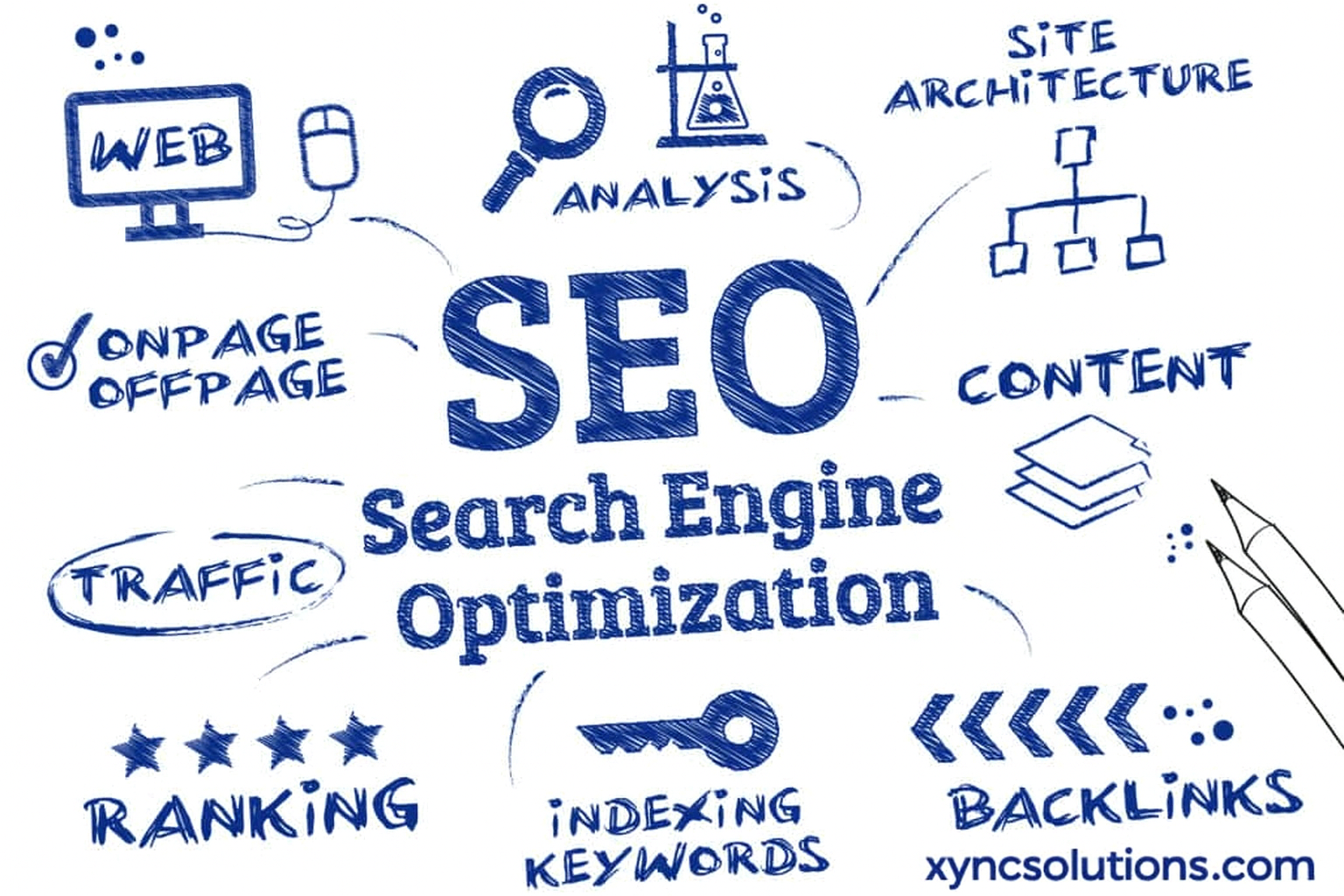
In 2025, Search Engine Optimization (SEO) remains a cornerstone of digital marketing, encompassing two primary strategies: On-Page SEO and Off-Page SEO. Both are essential for enhancing a website’s visibility and credibility, yet they focus on different aspects of optimization.
On-Page SEO involves optimizing elements within your website to improve its ranking in search engine results. This includes refining content quality, keyword usage, meta tags, URL structure, and ensuring a seamless user experience. By focusing on these internal factors, On-Page SEO ensures that search engines can effectively crawl, index, and understand your content, thereby improving its relevance and visibility.
Off-Page SEO, on the other hand, refers to actions taken outside your website to influence its position in search rankings. The primary focus here is on acquiring high-quality backlinks from reputable sites, social media engagement, influencer collaborations, and brand mentions. These external signals act as endorsements, indicating to search engines that your website is credible and valuable, which can positively impact its ranking.
While On-Page SEO lays the foundation by ensuring your website is optimized for search engines and users, Off-Page SEO builds your site’s reputation and authority in the broader digital ecosystem. Together, these strategies work synergistically to improve your website’s search engine rankings, drive targeted traffic, and ultimately contribute to its online success.
What is SEO and Why It Matters for Your Website
Search Engine Optimization (SEO) is the process of optimizing your website to improve its visibility on search engines like Google, Bing, and Yahoo. The main goal of SEO is to help your site rank higher in search results so that you can attract more visitors who are actively looking for the products, services, or information you provide. Without proper SEO, your website risks getting lost among millions of others, meaning your ideal audience may never find you.
Recent SEO reviews and reports (2025) from Moz and SEMrush highlight that 68–70% of online journeys begin with a search engine, making SEO more important than ever. But it’s not just about traffic numbers—SEO ensures that the traffic you receive is relevant and likely to convert into leads or customers. Imagine owning a beautifully designed store in a deserted alley; without visibility, your business suffers. SEO is that signboard that guides customers to your store online.
SEO builds trust and credibility, as people tend to believe that the first few results on Google are the most reliable and authoritative. With proper optimization, you can outperform competitors, establish your brand as an industry leader, and ensure long-term digital success.
The Difference Between On-Page SEO and Off-Page SEO
SEO has two main pillars: On-Page SEO and Off-Page SEO. Understanding the difference between them is essential to creating a complete strategy that maximizes your website’s ranking potential.
-
On-Page SEO refers to all optimizations you can control directly on your website. This includes your content quality, keyword placement, meta descriptions, title tags, URL structure, internal linking, and page speed. It ensures that search engines understand your website’s content and structure, making it easier to rank.
-
Off-Page SEO, on the other hand, focuses on actions taken outside your website to improve its reputation and authority. This includes link-building, guest blogging, social media marketing, influencer collaborations, and brand mentions. These signals tell search engines that other websites and users trust your site.
Recent SEO case studies (Ahrefs, 2025) show that websites combining strong On-Page and Off-Page SEO are 65% more likely to secure and maintain top rankings compared to those focusing on only one. Both elements work hand-in-hand: on-page makes your website relevant, while off-page makes it authoritative.
Key Elements of On-Page SEO Every Beginner Should Know
On-Page SEO is the foundation of your site’s optimization efforts. If your on-page setup is weak, even the best backlink strategy won’t keep you ranked for long. Key elements include:
-
Content Quality: Creating original, informative, and engaging content that meets user intent. Search engines prioritize helpful, human-first content, not keyword stuffing.
-
Keyword Optimization: Using target keywords naturally in headings, meta tags, URLs, and throughout your content.
-
Meta Tags: Crafting compelling title tags and descriptions that entice users to click on your link.
-
Image Optimization: Adding descriptive alt text, reducing image size for faster loading, and using relevant file names.
-
Mobile Responsiveness: Ensuring your website is fully accessible and easy to navigate on all devices.
-
Page Speed: A slow website leads to higher bounce rates and lower rankings.
According to a recent SEMrush report (2025), websites implementing these on-page strategies can see traffic increase by 40–60% within three months, especially when combined with content marketing and regular SEO audits.
Importance of High-Quality Content in On-Page SEO
Content remains king in 2025. No matter how technically optimized your website is, you cannot rank well without high-quality, valuable content. Search engines like Google now use advanced AI algorithms (such as Google’s Multitask Unified Model – MUM) to evaluate content relevance, depth, and usefulness.
High-quality content does the following:
-
Answers user queries in a detailed, easy-to-understand way.
-
Uses keywords naturally without overstuffing.
-
Provides unique insights or solutions not available elsewhere.
-
Encourages readers to stay longer on your site, reducing bounce rates.
 A recent HubSpot review revealed that websites publishing comprehensive, long-form content (2,000+ words) are 3 times more likely to rank on the first page than sites with thin content. In other words, the more you help your readers, the more Google rewards you.
Furthermore, content freshness matters. Updating old posts with new stats, images, and links can improve rankings significantly. Search engines want to deliver up-to-date information, so regular content updates are now a key on-page SEO factor.
Role of Keyword Research in On-Page Optimization
Keyword research is the foundation of SEO success. It involves finding the exact terms and phrases people type into search engines when looking for information, products, or services. Without keyword research, you risk creating content that nobody searches for—or worse, content that competes with established high-authority sites without a chance of ranking.
Effective keyword research involves:
-
Identifying search intent: Are users seeking information, comparing options, or ready to buy?
-
Using keyword tools: Platforms like Google Keyword Planner, Ahrefs, and SEMrush provide search volume, keyword difficulty, and related terms.
-
Targeting long-tail keywords: These are longer, more specific phrases with lower competition but high conversion potential.
Recent industry reviews (Search Engine Journal, 2025) confirm that websites with well-researched keyword strategies enjoy 60–70% better ranking performance than those relying on guesswork. The goal is to align your content with what your target audience is already searching for, making it easier to attract the right visitors and boost conversions.
Understanding Meta Tags: Title Tags and Meta Descriptions
Meta tags are essential for on-page SEO because they help both search engines and users understand what your page is about. A title tag is the clickable headline shown on search engine results pages (SERPs), while a meta description provides a short summary of the page’s content. Both elements significantly affect your click-through rate (CTR).
An effective title tag:
-
Is under 60 characters.
-
Contains the primary keyword naturally.
-
Creates curiosity or offers value (e.g., “10 Proven SEO Tips for Beginners”).
A well-written meta description:
-
Stays under 160 characters.
-
Includes a primary keyword and a call to action.
-
Gives users a reason to click (e.g., “Learn the difference between on-page and off-page SEO and boost your rankings fast!”).
Recent reviews (Backlinko, 2025) show that optimized meta tags can improve organic CTR by up to 35%, meaning more traffic without changing your rankings. Additionally, Google often rewrites poorly written or keyword-stuffed meta descriptions, proving that quality and relevance matter more than keyword repetition.
URL Structure and SEO-Friendly Permalinks
Your website’s URL structure plays a vital role in SEO. A clean, descriptive URL tells search engines and users exactly what the page is about. Shorter, keyword-rich URLs tend to rank higher and get clicked more often than long, confusing ones with random numbers or special characters.
Best practices for SEO-friendly URLs:
-
Use hyphens (-) to separate words.
-
Avoid unnecessary stop words like “and,” “the,” “of,” unless needed for clarity.
-
Keep URLs under 60 characters.
-
Include the target keyword naturally.
For example:
-
Good URL: yoursite.com/on-page-seo-tips
-
Bad URL: yoursite.com/article?id=1256&cat=seo
Recent data from SEMrush shows that URLs containing relevant keywords rank 45% higher on average than generic ones. Not only do they help search engines understand your content, but they also make your site more trustworthy to users, improving CTR.
Internal Linking Strategies for Better Rankings
Internal links are links that connect pages within your website. They help distribute authority, guide users to related content, and make it easier for search engines to crawl your site. A well-planned internal linking strategy can significantly improve rankings and user experience.
Key internal linking tips:
-
Use descriptive anchor text with relevant keywords.
-
Link to related, high-value pages to increase their visibility.
-
Avoid overlinking; focus on relevance, not quantity.
-
Ensure your site has a clear hierarchy (homepage → category → subpages).
Moz’s 2025 SEO report found that adding 2–3 internal links to older pages can increase organic traffic by up to 20% in a few weeks. Internal linking not only boosts rankings but also keeps visitors on your site longer, increasing engagement and conversion opportunities.
Optimizing Images for On-Page SEO
Images improve content readability and engagement, but unoptimized images can slow your website down and harm SEO. Search engines can’t “see” images directly, so they rely on file names, alt text, and surrounding content to understand them.
Best practices for image SEO:
-
Use descriptive file names (e.g., “on-page-seo-checklist.jpg” instead of “img123.jpg”).
-
Add alt text with relevant keywords for accessibility and ranking.
-
Compress images to reduce file size without compromising quality.
-
Use next-gen formats like WebP for faster loading.
Google’s 2025 ranking factors emphasize page speed and accessibility, with optimized images improving load times by 30–40%. Additionally, images optimized for SEO can appear in Google Images search, driving extra traffic to your site.
The Importance of Mobile-Friendliness in SEO
With over 63% of global searches now coming from mobile devices, Google uses a mobile-first indexing approach. This means your site’s mobile version is the primary factor for rankings. If your website is not mobile-friendly, you risk losing traffic, rankings, and potential customers.
Key mobile SEO practices:
-
Use responsive design that adapts to all screen sizes.
-
Ensure text is readable without zooming.
-
Avoid intrusive pop-ups or ads that disrupt user experience.
-
Test your site using Google’s Mobile-Friendly Test tool.
Recent reviews by Search Engine Journal highlight that mobile-optimized sites outperform non-optimized ones by 50% in both rankings and conversions. Mobile-friendliness is no longer optional—it’s a necessity for SEO success in 2025.
How Website Speed Affects On-Page SEO
Website speed is a confirmed ranking factor. Slow-loading websites frustrate users, increase bounce rates, and send negative signals to search engines. Studies show that a one-second delay in page load time can reduce conversions by up to 20%, proving that speed directly impacts revenue.
Ways to improve site speed:
-
Use a fast hosting provider and CDN (Content Delivery Network).
-
Compress images and use lazy loading.
-
Minimize CSS and JavaScript files.
-
Implement caching solutions for returning visitors.
Google’s Core Web Vitals update makes speed and user experience critical ranking factors. Websites meeting speed benchmarks are more likely to rank higher and retain visitors, making this one of the most important technical aspects of on-page SEO.

Schema Markup and Its Role in On-Page SEO
Schema markup is structured data that helps search engines better understand your website’s content. It uses a specific vocabulary of tags (microdata) to highlight important details on your pages, allowing them to appear as rich results in search results. This could include star ratings, FAQs, event dates, product information, or even recipes, depending on the website type.
Benefits of schema markup:
-
Improves visibility with enhanced SERP features (rich snippets).
-
Increases click-through rate (CTR) by making listings more attractive.
-
Helps search engines display relevant information more accurately.
For example, a page with schema markup for a product could show pricing, availability, and reviews directly in Google search results. According to a 2025 BrightLocal study, pages using schema markup experience 20–30% higher CTR compared to those without it, making it a powerful on-page SEO tool. Implementing structured data is straightforward, thanks to tools like Google’s Structured Data Markup Helper and plugins for CMS platforms like WordPress.
What is Off-Page SEO and Why is it Crucial?
While on-page SEO focuses on optimizing what’s within your website, off-page SEO builds your website’s reputation and authority across the internet. This involves activities done outside your website to improve how search engines and users perceive your site’s credibility, relevance, and trustworthiness.
Key off-page SEO signals include:
-
Backlinks from authoritative websites.
-
Mentions of your brand across the web.
-
Social media engagement and shares.
-
Reviews and ratings from trusted sources.
Google views external signals as “votes of confidence,” indicating that other websites and users find your content valuable. Recent SEO reviews (Ahrefs, 2025) show that off-page SEO factors account for around 50–55% of ranking signals, making it just as important as on-page efforts. Without strong off-page signals, your website may struggle to compete, even with perfectly optimized on-page content.
Building High-Quality Backlinks for Off-Page SEO
Backlinks remain one of the most powerful ranking factors in SEO. A backlink is a link from another website pointing to your site, essentially acting as an endorsement of your content’s quality and relevance. However, not all backlinks are created equal. Search engines prioritize links from high-authority, relevant websites over spammy or unrelated ones.
Effective backlink-building strategies include:
-
Creating link-worthy content: Publish in-depth guides, infographics, or original research that others want to cite.
-
Guest blogging: Write valuable content for authoritative sites in your niche, linking back to your own website.
-
Broken link building: Find broken links on other websites and offer your relevant content as a replacement.
-
Skyscraper technique: Improve on popular content in your niche and reach out to sites linking to the original post.
Recent data from SEMrush confirms that sites with high-quality backlinks from trusted domains are 4.5 times more likely to reach the top 3 search positions. On the other hand, low-quality or paid link schemes can trigger Google penalties, harming your site’s long-term SEO.
The Role of Social Media in Off-Page SEO
While social media signals aren’t a direct ranking factor, they have a significant indirect impact on SEO success. Active social media profiles help amplify your content, increase visibility, and attract backlinks organically. Each share, like, or comment creates more opportunities for people to discover and link to your website.
Benefits of social media for SEO:
-
Drives referral traffic to your website.
-
Builds brand awareness and authority.
-
Encourages natural link-building from people who discover your content.
-
Helps index new content faster when widely shared.
A 2025 Hootsuite report shows that brands actively engaging on social media receive 30–40% more organic traffic to their websites compared to inactive competitors. Social media isn’t about posting randomly—it’s about sharing valuable, optimized content where your target audience spends time online.
Guest Posting as an Off-Page SEO Strategy
Guest posting is one of the most effective and sustainable ways to build high-quality backlinks while establishing yourself as an authority in your niche. By contributing content to relevant, reputable websites, you not only gain exposure but also secure a contextual backlink to your own site.
Key tips for successful guest posting:
-
Target websites with strong domain authority and relevant audiences.
-
Pitch unique, well-researched content ideas that add value.
-
Avoid spammy guest post networks or low-quality blogs.
-
Include a natural backlink in the content or author bio.
Recent reviews from HubSpot show that businesses leveraging guest blogging experience up to 70% faster organic traffic growth compared to those relying solely on passive link-building tactics. Guest posting also helps build long-term partnerships with industry influencers and brands, strengthening your overall SEO efforts.
Brand Mentions and Online Reputation Management
In today’s SEO landscape, brand signals play a major role in rankings. Google considers how often and in what context your brand is mentioned online, even without a direct backlink. Positive mentions across forums, blogs, news articles, and review platforms can boost your site’s perceived authority.
Online reputation management (ORM) involves:
-
Encouraging satisfied customers to leave positive reviews.
-
Responding professionally to negative feedback.
-
Ensuring brand information is consistent across all platforms.
-
Actively engaging in niche communities to increase visibility.
Studies in 2025 show that businesses with strong online reputations receive 2.5 times more search traffic and are significantly more likely to convert leads into paying customers. Brand signals and trust are becoming more prominent ranking factors, meaning your off-page SEO must include ORM efforts for long-term success.
The Importance of Local Citations in Off-Page SEO
For businesses targeting local customers, local SEO is essential, and citations are a major factor in local rankings. A local citation is any online mention of your business’s Name, Address, and Phone Number (NAP). These citations help search engines verify your business’s legitimacy and improve your chances of ranking in local search results and Google Maps.
Key places to build local citations include:
-
Google Business Profile (formerly Google My Business)
-
Yelp, Yellow Pages, and other online directories
-
Local chamber of commerce websites
-
Niche-specific directories related to your industry
Consistency is crucial—your NAP must match exactly across all platforms. Recent data from BrightLocal shows that businesses with 50+ accurate local citations receive 30% more calls and leads from Google Maps compared to competitors with inconsistent or missing citations. Local SEO and citations are especially critical for service-based businesses like plumbers, restaurants, and medical clinics that rely on nearby customers.
How Influencer Outreach Helps Off-Page SEO
Influencer marketing is no longer just a social media tactic—it’s a powerful SEO booster. When credible influencers in your niche mention your brand or link to your website, it sends strong trust signals to search engines and exposes your content to a wider audience.
Benefits of influencer outreach:
-
Builds high-quality, authoritative backlinks naturally.
-
Increases brand exposure to highly targeted audiences.
-
Generates social proof and improves online reputation.
-
Creates long-term partnerships for future collaborations.
Recent reviews from Influencer Marketing Hub (2025) show that businesses leveraging influencer collaborations for SEO experience up to a 40% boost in rankings within 6 months, largely due to high-quality mentions and backlinks. Unlike traditional link-building, influencer outreach feels more organic and user-focused, making it safer and more sustainable for long-term SEO.
Difference Between White Hat and Black Hat Off-Page SEO Techniques
Not all SEO techniques are ethical or sustainable. Understanding the difference between White Hat SEO and Black Hat SEO is critical for long-term success.
-
White Hat SEO: Follows Google’s guidelines and focuses on providing real value to users. Examples include high-quality content creation, natural backlink building, guest posting on reputable sites, and authentic brand mentions.
-
Black Hat SEO: Relies on manipulative tactics to trick search engines, such as buying backlinks, keyword stuffing, cloaking, and using private blog networks (PBNs). These can lead to Google penalties or even permanent deindexing of your site.
Case studies from Search Engine Journal highlight that sites using black-hat tactics may see short-term gains but often face ranking drops or bans, while white-hat strategies consistently provide stable, long-term results.
Tools for Tracking On-Page and Off-Page SEO Performance
Monitoring SEO performance is essential to measure your efforts and adjust your strategy. Thankfully, many tools are available to track rankings, backlinks, and overall website health.
Popular tools include:
-
Google Analytics & Search Console: For traffic analysis, indexing issues, and keyword impressions.
-
Ahrefs: Comprehensive backlink analysis, keyword tracking, and site audits.
-
SEMrush: Competitor analysis, site performance, and content optimization recommendations.
-
Moz: Domain authority checks, link-building insights, and SEO metrics.
-
Screaming Frog: Technical SEO audits, broken link detection, and site structure analysis.
According to recent reviews, businesses regularly using SEO tools for analysis are 60% more successful in improving their rankings compared to those relying solely on guesswork. Consistent tracking allows you to fix issues early and stay ahead of competitors.
Common Mistakes Beginners Make in On-Page SEO
Many beginners unknowingly sabotage their SEO efforts with avoidable mistakes. Some of the most common errors include:
-
Keyword stuffing: Overusing keywords makes content unreadable and leads to Google penalties.
-
Ignoring meta tags: Missing or poorly optimized titles and descriptions reduce click-through rates.
-
Duplicate content: Copying content from other sites or duplicating your own pages harms rankings.
-
Poor site structure: Complicated navigation confuses both users and search engines.
-
Slow website speed: Failing to optimize images, hosting, and scripts leads to high bounce rates.
Search Engine Land reports that websites correcting these basic on-page errors see an average 30–50% improvement in rankings within 90 days, proving the importance of doing SEO right from the start.
Common Off-Page SEO Mistakes to Avoid
Just as with on-page SEO, many beginners make crucial errors when building off-page authority. These include:
-
Buying backlinks: Leads to spammy profiles and potential Google penalties.
-
Linking from irrelevant sites: Low-quality, unrelated backlinks provide little to no SEO value.
-
Neglecting local SEO: Missing out on nearby customers by ignoring local citations and reviews.
-
Ignoring brand reputation: Negative online mentions and poor reviews hurt trust signals.
-
Over-reliance on guest posting: Using low-quality networks or duplicate guest posts damages credibility.
Recent case studies show that websites engaging in spammy link-building often face ranking drops of 60–80% after Google algorithm updates, making it crucial to focus on quality over quantity in off-page efforts.
The Relationship Between On-Page and Off-Page SEO for Rankings
On-page and off-page SEO are not competitors—they are two sides of the same coin. On-page SEO ensures your website is relevant, accessible, and optimized for search queries. Off-page SEO proves to search engines that your content is trustworthy and recommended by others.
Here’s how they work together:
-
On-page SEO helps you get indexed and ranked for targeted keywords.
-
Off-page SEO builds your website’s reputation, pushing it higher in search results.
-
A strong backlink profile won’t help if your content is poorly optimized.
-
Great on-page SEO won’t rank without external authority signals.
Recent Ahrefs reports confirm that websites with both strong on-page optimization and a solid backlink strategy are 3x more likely to dominate page one of Google compared to those focusing on only one aspect.
Conclusion
On-page and off-page SEO are equally important pillars of a successful search strategy. On-page optimization ensures that your website is relevant and technically sound, while off-page efforts build the authority and trust needed to rank high on search engines. Beginners often focus on one side, but true long-term success comes from mastering both.
By following this guide and avoiding common mistakes, you’ll set a strong foundation for improving your site’s visibility, attracting qualified traffic, and ultimately achieving your business goals online. SEO may take time, but with the right mix of on-page and off-page tactics, the results are long-lasting and highly rewarding.